
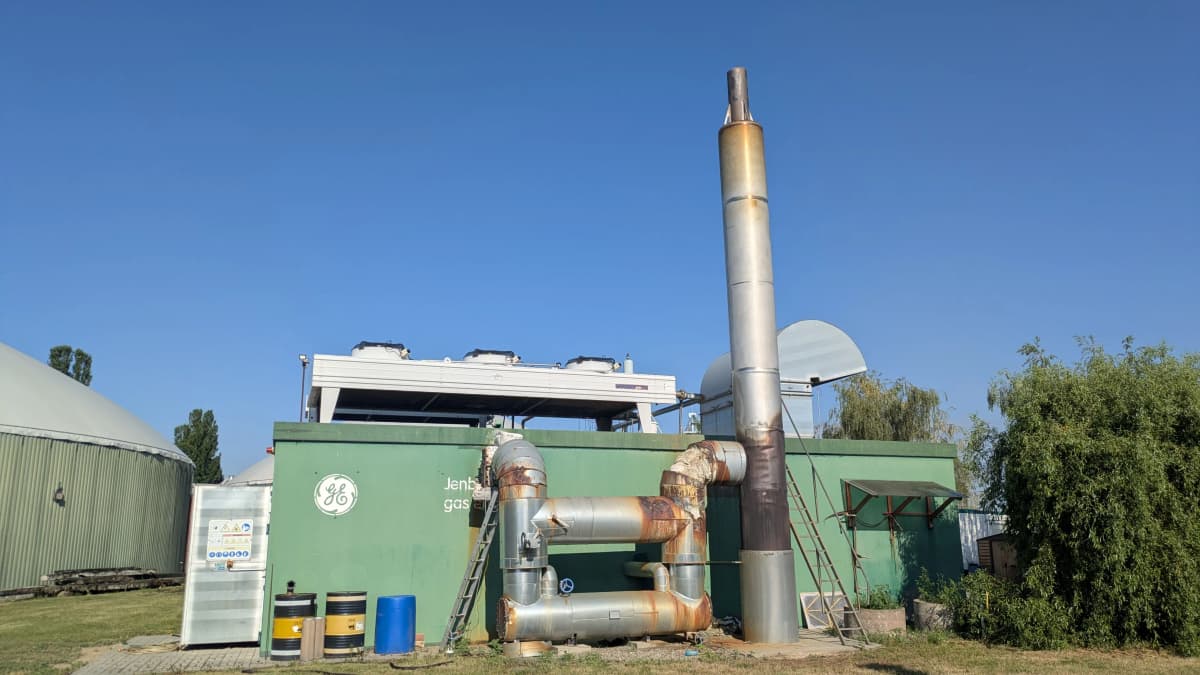
Why the cogeneration unit should be addressed in time
A cogeneration unit is often prepared as a technical upgrade of building energy systems. The operator addresses output, payback, gas connection, electricity, and heat utilisation. From the authorities' perspective, however, a new or changed source of emissions and noise arises.
For smaller installations permitting may be simpler. For larger units, multiple units in one locality, operation in a hospital, industrial site, residential area, or municipal boiler plant, supporting documents may already be needed for air protection, noise, building proceedings, unified environmental statement (JES), operating permit, or change to existing permit.
The greatest problems arise when the CHP unit is ordered and structurally prepared before it is clear whether it will meet emission requirements, whether it has a correctly designed chimney, and whether there will be a noise problem. Subsequent solution of exhaust, silencers, chimney height, or acoustic modifications is usually more expensive than incorporating them into the project.
What authorities usually focus on for cogeneration
A cogeneration unit is not assessed only according to electrical output. For air protection what is essential is mainly rated thermal input in fuel, type of combustion equipment, fuel, and total input of all related combustion sources in the operation.
For noise, unit location matters, whether it is inside a building or in a container, how air intake and exhaust are resolved, cooling, flue gas exhaust, possible dry cooler, operating hours, and distance to nearest protected spaces. A cogeneration unit can be acoustically problematic even when it is in order from the emission perspective.
The authority may require especially the CHP technical data sheet, fuel data, input and output, chimney or discharge description, operating hours, location in building or site, relationship to existing boiler plant, emission parameters from manufacturer, noise parameters, and draft operating conditions.
Operating permit: thermal input and source classification decide
For cogeneration units it is necessary first to determine whether it is a listed stationary source under the Air Protection Act. For gas CHP units this is usually a reciprocating combustion engine. In Annex No. 2 to Act No. 201/2012 Coll. total rated thermal input is monitored for combustion of fuels in reciprocating combustion engines, already from the threshold of 0.3 MW.
Practically this means that looking only at electrical output stated in the supplier offer is not enough. Input in fuel must be known for assessment. For one unit electrical output may be for example significantly lower than thermal input in fuel. If there are multiple units in the building or other combustion sources are part of the same operation, their mutual relationship must be assessed.
For a listed source an operating permit or change to existing permit may be needed. If CHP is added to an existing boiler plant, one cannot automatically assume that the old permit for boilers covers it. A reciprocating combustion engine has different emission characteristics from a boiler and is usually assessed separately.
Practical note: Before ordering the unit always verify not only electrical output but mainly rated thermal input in fuel. That often decides whether the source will fall under the permitting regime under the Air Protection Act.
What emissions are addressed for a cogeneration unit
For cogeneration units on natural gas NOx and CO are most commonly addressed. Depending on equipment type, fuel, operating regime, and decree or permit requirements, other substances may also be relevant. For fuels other than natural gas the scope of assessment may change significantly.
Emission parameters stated by the manufacturer are an important supporting document, but on their own they may not suffice. The authority or expert assessment processor needs to know under what conditions values were guaranteed, whether they are recalculated to correct oxygen content, whether they apply to the given fuel, what the operating regime is, and whether emission reduction technology will be installed, for example a catalytic system.
For CHP it is also important to distinguish normal operation and non-standard states. Emissions during start, ramp-up, shutdown, or failure may differ from steady operation. For permitting operating conditions are usually set so that it is clear when the unit may run, how operation will be monitored, and how compliance with emission requirements will be demonstrated.
Emission measurement: when it is carried out and why to address it already in the project
If the cogeneration unit is a listed source or if the permit so requires, the operator will usually need authorised emission measurement. This serves to verify whether the source after putting into operation actually meets emission limits and permit conditions.
Emission measurement must be prepared technically. The chimney or exhaust duct must have a suitable measuring point, safe access, sampling ports, working platform, or other solution allowing measurement according to requirements. If this is forgotten in the project, measurement after installation may be difficult or impossible without additional modifications.
A typical problem is exhaust led to a place without safe access, without sufficient straight duct section, without sampling port, or where unsuitable flow conditions disturb measurement. For compact container CHP units it therefore pays to address the measuring point already with the technology supplier.
More on emission measurement can be found on the NATURCHEM Emission measurement page.
Chimney, discharge, and flue gas routing
Flue gas discharge is not just a technical detail. Height, location, and design of the chimney can decide dispersion of emissions, operational safety, possibility of measurement, and relationship to surrounding development. With low discharges in dense development a problem can arise even for equipment that otherwise meets emission limits.
During design it is necessary to check where flue gases will be discharged, whether the discharge does not end at unsuitable height, whether nuisance to surroundings will occur, whether emission measurement is possible, and whether the chimney meets requirements of designer, manufacturer, and permitting documentation.
For CHP located in a container not only flue gas exhaust but also noise from exhaust, intake, and cooling is often addressed. Technical solution must therefore be coordinated. The chimney should not be assessed in isolation from acoustics and equipment operation.
Noise from a cogeneration unit
Noise is a very common problem with cogeneration units. The noise source is not only the engine itself. Flue gas exhaust, air intake, heat removal, fans, coolers, container, building structure penetrations, vibration, and noise transmission into the structure can be significant.
For hospitals, apartment buildings, schools, municipalities, or operations near residential development it is advisable to address noise already before installation. A cogeneration unit may run long-term and sometimes also in evening or night hours. From the perspective of hygiene limits this is essential because night operation is usually assessed more strictly than day operation.
A noise study should work with actual unit location, acoustic parameters of technology, operating hours, current noise background, nearest protected spaces, and all relevant sources. If CHP is added to a site where fans, boiler plant, cooling, or traffic already exist, concurrent sources must also be assessed.
When a noise study is appropriate and when noise measurement
A noise study is appropriate before installation or before permitting. It allows estimation of whether the proposed solution will meet hygiene limits and whether silencers, noise enclosures, acoustic louvres, resilient mounting, exhaust modification, or night operation limitation will need to be added.
Noise measurement makes sense after installation, during inspection, during complaints, or when verifying effectiveness of noise control measures. If measurement takes place only after unit start-up and non-compliant state is found, solution is usually more complex. Therefore in sensitive localities it is better first to prepare a noise study and later verify actual state by measurement.
For CHP attention should also be paid to tonal components and low-frequency character of noise. Subjectively bothersome noise may not always be only a question of overall sound pressure level. Study and measurement should therefore correspond to actual character of the source.
Operating hours and operating regime
Operating hours are important for air, noise, and operation economics. The authority may require information on whether the unit will run continuously, only at peaks, seasonally, on working days, or as backup source. For cogeneration longer operation is usual because equipment economics depend on heat and electricity utilisation.
From the noise perspective it is essential whether the unit will run at night. From the emission perspective what matters is annual number of operating hours and whether emissions are evaluated as normal operational source or whether the equipment has a special regime. For backup sources different considerations may apply than for cogeneration intended for regular operation.
Operating regime should be described realistically. If short operation is stated in documentation but the unit will in reality run most of the year, risk of non-compliance arises during inspection and when addressing complaints.
What documentation should contain
Good documentation for a cogeneration unit must link manufacturer technical data with actual location and operation. A brochure alone is not enough. The authority needs to understand how the unit will actually be operated and what impacts it will have on surroundings.
| Area | What needs to be demonstrated or described |
|---|---|
| Technology | CHP type, manufacturer, model, number of units, electrical output, thermal output, and rated thermal input in fuel. |
| Fuel | Fuel type, consumption, fuel quality, and link to gas connection or other supply. |
| Emissions | Guaranteed emission parameters, relevant pollutants, emission limits, possible emission reduction technology. |
| Chimney and flue gases | Flue gas route, discharge height, diameter, temperature, volumetric flow, measuring point, and safe access for measurement. |
| Noise | Acoustic parameters of unit, intake, exhaust, cooling, location, and distance to protected development. |
| Operation | Operating hours, day/night operation, seasonality, normal and maximum regime. |
| Permitting | Link to existing boiler plant, operating permit, building proceedings, JES, regional authority or KHS requirements. |
For larger installations or sensitive localities it is advisable to prepare documentation so that emissions and noise are addressed concurrently. Technical solution of exhaust, silencers, intake, cooling, and chimney must make sense as a whole.
Most common mistakes in practice
The most common mistake is assessing CHP according to electrical output instead of thermal input in fuel. The operator then underestimates obligations under the Air Protection Act and finds out too late that the unit may require operating permit or emission measurement.
A second frequent mistake is omission of measuring point on the flue gas path. If sampling port and safe access are not prepared in the project, additional building or technological modifications must be addressed later.
A third problem is noise. The supplier often states acoustic power or noise level under certain conditions, but specific location on site may differ. Intake, exhaust, cooling, and reflections from facades can cause actual state not to correspond to expectations.
A common mistake is also unclear relationship to existing boiler plant. If CHP is added to operation where boilers or other combustion sources already exist, the entire energy complex must be assessed and verified whether permit, operating rules, or emission and noise conditions are changing.
What you can send us for assessment
For initial assessment send the cogeneration unit technical data sheet, fuel data, electrical output, thermal output and rated thermal input, proposed location, flue gas route, chimney height, operating hours, and information on whether the unit will also run at night.
It is also advisable to send site situation, boiler plant floor plan or section, distance to nearest residential buildings or other protected spaces, data on existing boilers, and any existing operating permit. If you already have a requirement from the regional authority, KHS, building authority, or designer, send that as well.
We will verify requirements for emissions, noise, and permitting of the cogeneration unit. We will propose whether operating permit, expert opinion, dispersion study, authorised emission measurement, noise study, noise measurement, or technical solution modification will be needed.
Brief summary
A cogeneration unit must be assessed according to actual technical parameters and operating regime. What is decisive is especially thermal input in fuel, type of combustion engine, fuel, chimney, emissions, noise, operating hours, and location relative to surrounding development.
Before installation it is advisable to verify whether the unit falls among listed air pollution sources, whether it will need operating permit, how emission measurement will proceed, and whether the design will meet noise limits. In sensitive localities it is advisable to address a noise study before ordering final technology.
Send us the CHP technical data sheet, fuel, input/output, chimney, location, and operating hours. We will verify what supporting documents will be needed for emissions, noise, operating permit, and subsequent measurement.
Factual basis of the article
| Supporting document | Practical significance |
|---|---|
| Act No. 201/2012 Coll., on air protection | Basic act for permitting and operation of stationary air pollution sources. For CHP it is necessary to determine whether it is a listed source under Annex No. 2. |
| Annex No. 2 to Act No. 201/2012 Coll. | For cogeneration units with reciprocating combustion engine code 1.2 for combustion of fuels in reciprocating combustion engines according to total rated thermal input is relevant. |
| Decree No. 415/2012 Coll. | Sets emission limits, method of determining pollution level, requirements for expert supporting documents, operating records, and other requirements to the Air Protection Act. |
| Annex No. 2 to Decree No. 415/2012 Coll. | Contains specific emission limits and technical conditions for combustion stationary sources. For CHP the correct part must be used according to source type, input, fuel, and date of putting into operation. |
| Act No. 258/2000 Coll., on public health protection | Legal basis for health protection from noise. For CHP the relationship to protected outdoor and indoor spaces of buildings is important. |
| Government Regulation No. 272/2011 Coll. | Sets hygiene limits for noise and method of assessing noise and vibration. Used for noise studies and noise measurement after CHP installation. |
| Act No. 148/2023 Coll., on unified environmental statement | May be relevant for some projects for unifying environmental requirements in subsequent permitting process. |
| Operating permit, existing operating rules, and project documentation | In a specific operation what is already permitted, whether adding CHP changes source, operating conditions, emissions, chimney, or noise situation is decisive. |
From these supporting documents it follows that CHP cannot be assessed only as economic or energy equipment. The operator must verify requirements for air, emission measurement, noise, chimney, and operating permit in time. If these questions are addressed only after installation, remediation may be technically and financially demanding.