
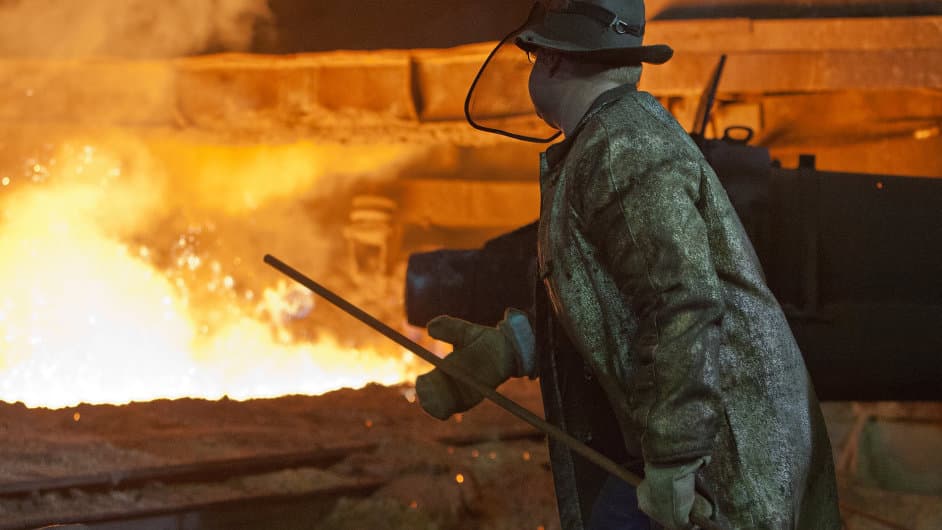
Why a welding shop cannot be assessed only by visible smoke
In a welding shop, welding fumes, fine solid particles, and substances arising from metal, filler material, surface treatment, or residues of contaminants on parts are released during work. Visible smoke is only an indicative signal. For professional assessment, what the worker actually breathes in the breathing zone and how long they are exposed matters.
A welding shop can be a dual problem for the operator. The first dimension is work environment, i.e. health protection of welders and other employees in the hall. The second dimension is air protection if pollutants are extracted and discharged through an exhaust to outdoor air.
Workplace air measurement and emission measurement are not the same thing. One assesses employee exposure, the other assesses pollution of outdoor air.
Welding fumes and their composition
Welding fumes are not one universal "dust". Their composition changes according to what is welded, with what, and under what conditions. The situation differs for structural steel, stainless steel, aluminium, or galvanised parts.
| Factor | Why it matters |
|---|---|
| welded material | affects metal content in welding fume |
| filler material | can be a significant source of manganese, chromium, nickel, or other metals |
| welding method | affects fume quantity and particle size |
| surface treatment of parts | galvanising, coating, oil, or preservation can change emission composition |
| current and welding regime | affect fume generation intensity |
| extraction | decides how much fume reaches the worker's breathing zone |
From a work environment perspective, not only total particle mass is usually addressed. For welding fumes, determination of specific metals may also be important, for example manganese, chromium, nickel, iron, zinc, or aluminium. This applies especially where stainless, alloy, or surface-treated materials are welded.
Dust and metals in the welding shop
At a routine view of the workplace, the main problem may seem to be only smoke above the weld. Professionally, however, solid particles as such and their chemical composition must be distinguished.
| What is assessed | Practical significance |
|---|---|
| welding fumes as solid particles | basic data on particle quantity in workplace air |
| manganese | significant for many steels and filler materials |
| chromium and nickel | typical risk components when welding stainless steels |
| zinc | important when welding galvanised parts |
| aluminium | relevant when welding aluminium and its alloys |
| iron | common component when welding steels |
Put practically: two welding shops may look similarly smoky, but risk for workers may differ. Not only fume quantity decides, but also whether it contains toxicologically significant metals.
Local extraction: what matters is capturing fume at source
Local extraction should capture welding fume as close as possible to the point of origin. If fume first disperses in the hall space and is only then removed by general ventilation, the worker has often already inhaled it. Local extraction is therefore usually more effective than relying only on general hall ventilation.
Typical solutions are extraction arms, extracted welding tables, extracted fixtures, torches with integrated extraction, robotic cells with extraction, or central filtration systems.
Installation of extraction alone is not enough, however. Details often decide in practice: nozzle position relative to the weld, air flow, filter clogging, welder work habits, and whether extraction interferes with work. If the worker moves the arm away because it obstructs view or handling, technically good equipment may not fulfil its purpose.
| Problem | Impact in practice |
|---|---|
| extraction arm is far from weld | fume escapes outside capture |
| clogged filter | flow and extraction effectiveness decrease |
| poor airflow in hall | fume spreads to surrounding workplaces |
| extraction interferes with work | workers do not use it consistently |
| only general hall ventilation | exposure in breathing zone may remain high |
For a well-designed welding shop, therefore, not only presence of extraction is assessed but its actual function during normal work.
Workplace air measurement in the welding shop
Workplace air measurement should determine what exposure employees are actually subject to. For job categorisation and health risk assessment, personal sampling in the worker's breathing zone is usually most important. Stationary measurement can be useful for assessing hall space, ventilation effectiveness, or comparison of workplaces, but on its own it may not replace assessment of personal exposure.
| Measurement type | What it shows | When it is used |
|---|---|---|
| personal sampling | what the worker actually breathes | job categorisation, RHA requirement, exposure assessment |
| stationary sampling | concentration at selected location | space check, workplace comparison, ventilation verification |
| measurement after extraction upgrade | effectiveness of technical measure | check of investment in filtration or HVAC |
| measurement during representative shift | normal real load | basis for practice and authorities |
Before measurement, it is necessary to know what is welded, by what method, for how long, with what filler material, and whether the worker also grinds, cleans, or handles parts during the shift. Combination of welding and grinding can significantly change dust character at the workplace.
Representative shift: measure on the right day
Shift selection is essential for the result. If measurement is carried out on a day when little welding takes place, a different material than usual is used, or the main workplace is not in operation, the result may not correspond to actual risk.
A representative shift should correspond to normal significant operation. It need not be the worst conceivable day, but it should not be an exceptionally quiet regime either. For job-order production, it is sometimes advisable to select a shift when material or product corresponding to typical or significant exposure is welded.
When preparing measurement, therefore, welded material type, welding time, number of workplaces in operation, use of extraction, concurrent grinding, and specific welder work procedure are monitored.
Manual welding, robotic workplace, and grinding
Different types of workplaces cannot automatically be assessed the same way. A manual welder is often directly at the fume source, changes position, works with different parts, and exposure depends on work habits and use of extraction. A robotic cell may have a different regime because the worker may not stand permanently at the arc but may be exposed to emissions during loading, inspection, or repairs.
Grinding is separately important. It can create significant dust that differs in composition from welding fume itself. If the worker welds part of the shift and grinds part of the shift, this combination must be reflected in assessment.
| Work situation | What may be decisive |
|---|---|
| manual welding | worker breathing zone, extraction position, welding time |
| robotic welding | cell extraction, operator presence, repairs and adjustment |
| weld grinding | dust, metals, abrasive, local extraction |
| stainless welding | chromium, nickel, filler material composition |
| galvanised welding | zinc and character of surface treatment |
| maintenance welding | variability of activities and materials |
When a welding shop may also be an emission source to outdoor air
Besides work environment, a welding shop may also be relevant under the Air Protection Act. For welding of metal materials, total electrical input of welding workplaces is especially decisive. If it reaches 1,000 kW or more, it may be a listed stationary source.
In such a case, not only welder exposure is addressed but also exhausts, filtration, total suspended particulate emission measurement, operating records, and possibly operating permit. Decree No. 415/2012 Coll. states an emission limit for total suspended particulates for welding of metal materials with total electrical input of 1,000 kW or more as a listed stationary source; this requirement does not apply to resistance welding.
Workplace air and outdoor emissions must be kept separate:
| Area | What is assessed | Typical purpose |
|---|---|---|
| work environment | worker exposure in hall | RHA, job categorisation, health protection |
| emissions to outdoor air | pollution discharged through exhaust | regional authority, CEI, operating permit |
| extraction and filtration | technical limitation of fume and dust | protection of workers and outdoor air |
| operating records | operation, filters, faults, measurement | demonstration of compliance with conditions |
Emission measurement at an exhaust therefore does not automatically say what welder exposure is. Conversely, measurement in the worker's breathing zone does not replace emission measurement at the exhaust.
What the operator should have prepared
For correct assessment of a welding shop, basic technical and operational data should be prepared. It is not necessary to start with a long form, but without knowledge of technology, measurement and documentation cannot reasonably be proposed.
Most important is information on welded materials, filler materials, methods used, welding time, number of workplaces, extraction, filtration, exhausts, and possible grinding. If a requirement from RHA, regional authority, or CEI is already available, it is advisable to provide it at the outset. According to it, it can be distinguished whether the authority addresses work environment, emissions to outdoor air, operating records, or operating permit.
Most common mistakes
At welding shops, the difference between visible smoke and actual composition of welding fume is often underestimated. The operator sometimes addresses only total dust but not specific metals. Elsewhere, extraction that is installed but not effectively used during work is relied on.
A common mistake is also confusing work environment and emissions to outdoor air. If a welding shop has exhausts to outdoor air and falls under the listed source regime, worker exposure measurement alone is not enough. Conversely, for a smaller welding shop, workplace air may be the main topic, not operating permit under the Air Protection Act.
Summary
A welding shop is a workplace where welding fumes, dust, metals, grinding, local extraction, and possibly also emissions to outdoor air may combine. For correct assessment, visual impression or general label "welder" is not enough. Specific material, welding method, filler material, exposure time, extraction effectiveness, and actual work regime decide.
For larger welding shops, link to air protection must also be verified, especially if total electrical input of welding reaches values at which it may be a listed stationary source. Work environment and emissions to outdoor air are technically related, but from the perspective of measurement and documentation they are two distinct areas.
Send us a welding shop description, list of welded materials, welding types, information on extraction, filtration, exhausts, and any requirement from RHA, regional authority, or CEI. We will propose a suitable scope of workplace air measurement, assessment of metals in welding fumes, and further procedure for emissions to outdoor air.
Factual basis of the article
The article is based mainly on these regulations:
- Government Regulation No. 361/2007 Coll., setting conditions for health protection at work,
- Decree No. 432/2003 Coll., on job categorisation,
- Act No. 201/2012 Coll., on air protection,
- Decree No. 415/2012 Coll., on permissible pollution levels and their determination.
Government Regulation No. 361/2007 Coll. lists welding fumes among dusts with possible fibrogenic effect and notes that their composition depends among other things on welded material, filler material, and welding current. Toxic metals in welding fumes must also be considered. Decree No. 415/2012 Coll. sets emission requirements for welding of metal materials with total electrical input of 1,000 kW or more as a listed stationary source.